
Rod Brind’Amour stands on the cusp of another significant achievement in Carolina. The Hurricanes secured a 4-2 victory over the Vegas Golden Knights in Game 5 of the Stanley Cup Final in Raleigh, seizing a 3-2 advantage in the series and positioning themselves for their first championship in two decades.
The initial part of Game 5 did not favor Carolina. Vegas scored first and maintained early momentum. However, the Hurricanes responded with four consecutive goals, relying on Brandon Bussi’s steady goaltending and weathering a late surge from the Golden Knights.
Hurricanes Mount a Comeback After Vegas Takes the Lead
Vegas opened the scoring in Game 5 on an early power play. Pavel Dorofeyev beat Bussi at 6:52 of the first period, giving the Golden Knights a 1-0 lead and momentarily quieting the home crowd. This goal reflected a strong start from Vegas, who dictated the early play and generated pressure on the rush.
Carolina’s veteran players provided the equalizer. Jordan Staal tied the game at 1-1 at 11:46 of the first, redirecting a pass from Nikolaj Ehlers from the high slot over Carter Hart. This goal seemed to settle the Hurricanes and shift the game’s momentum, with Carolina subsequently controlling play in the offensive zone and forcing Vegas into lengthy defensive shifts.
The second period was dominated by Carolina’s special teams and top line. Andrei Svechnikov scored a power-play goal from the top of the left circle at 11:58 of the second, putting Carolina up 2-1. Sebastian Aho then extended the lead to 3-1 at 17:51, scoring his first goal of the series and igniting the crowd.
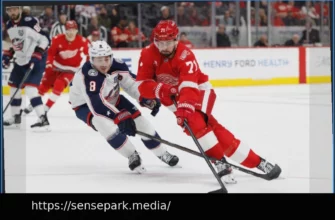
In the third, Svechnikov scored again on the power play at 11:08, his second of the night, making it 4-1. Dorofeyev responded with his second goal at 13:49, cutting the deficit to 4-2. Vegas then pulled their goalie for an extra attacker during a late power play. Carolina’s penalty kill and Bussi held strong, blocking shots and securing the 4-2 win.
Brind’Amour Nears a 20-Year Milestone
Brind’Amour’s connection to this championship stage dates back twenty years. He captained the Hurricanes to their only Stanley Cup in 2006, defeating the Edmonton Oilers in a seven-game series. Now, he leads from the bench, aiming to bring a second title to the same franchise as head coach.
He took over coaching duties in 2018 after serving as an assistant and immediately revitalized the team. Carolina ended its long playoff drought in the 2018-19 season, reaching the Eastern Conference Final that spring. The Hurricanes have been a playoff fixture every season since, transforming from an overlooked team into a consistent contender in late spring and early summer.
The journey has not been without challenges. Between 2009 and 2025, Carolina accumulated a difficult record in conference final games. Brind’Amour’s own tenure was briefly uncertain in 2024 during contract negotiations, but an agreement was reached, a decision that now appears significant as the Hurricanes are one win away from the Cup.
Regular Season Success and Playoff Progression
Carolina’s presence in this Final is built upon a strong regular season and a clear organizational development path. The Hurricanes finished the 2025–26 regular season with a 53-22-7 record, topping the Metropolitan Division and the Eastern Conference. Their success was driven by their usual strengths: exceptional shot suppression, strong five-on-five play, and balanced scoring throughout the roster.
Aho led the offensive charge, supported by Svechnikov, Seth Jarvis, and other contributors like Ehlers and Jackson Blake. On defense, Jaccob Slavin anchored a unit that effectively limited opponents’ high-danger scoring chances. The team’s structured approach allowed different players to step up on various nights, a trend that continued into the playoffs.
In the postseason, Carolina’s path to the Final involved physically demanding and high-scoring series. The Hurricanes utilized their forecheck, special teams, and defensive depth to advance through the Eastern Conference. While Frederik Andersen initially handled most of the goaltending duties, a challenging stretch led to a change. Brandon Bussi took over and provided stability, notably with his performance in a dramatic Game 4 win in Vegas and his composed play in the Game 5 victory.
Logan Stankoven has been a key player in this playoff run, stepping into a more prominent role and delivering crucial goals and energy. Carolina’s ability to integrate him and other younger talent with the established core has kept the team dynamic and competitive deep into the playoffs.
One Win Away from Breaking the Championship Drought
The Hurricanes now find themselves in a familiar position, just as they were in 2006: one win away from the Stanley Cup. Game 5 demonstrated their resilience, ability to recover from an early setback, and to impose their style of play. They overcame a 1-0 deficit, scored four unanswered goals, and then withstood a determined effort from a seasoned Vegas team fighting for a series advantage on the road.
The Golden Knights possess the talent and experience to force a Game 6 on home ice. Dorofeyev’s two-goal performance in Game 5, along with offensive threats like Jack Eichel and Mark Stone, highlights that Carolina’s task is not yet complete. Vegas will have the final change and the energy of a raucous home crowd.
For Brind’Amour and the Hurricanes, the opportunity is clear. A franchise that spent nearly a decade out of the playoffs and endured years of conference final disappointment now holds a 3-2 lead and a chance to secure the Cup. One more complete performance would not only end a 20-year wait but also solidify Brind’Amour’s legacy as one of the few individuals to win the Stanley Cup with the same franchise as both captain and head coach.