
In Voorhees, N.J., Trevor Zegras keeps a prominent, large-scale replica of his EA Sports NHL 23 video game cover. It portrays him in an Anaheim Ducks jersey and shorts, poised as if for a street hockey showdown against Team Canada`s Sarah Nurse.
When Zegras gazes at that iconic cover today, what does he perceive?
“The exact same individual,” he asserts.
However, a significant portion of the NHL community has pondered the disappearance of that vibrant version of Trevor Zegras.
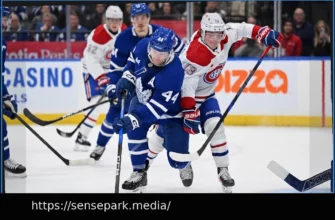
Zegras`s initial three seasons in the NHL were remarkable. He accumulated an impressive 139 points across 180 games while with the Ducks. He quickly emerged as the emblem for a new generation of players, renowned for attempting audacious trick shots and netting several “Michigan” lacrosse-style goals.
His most celebrated moment occurred on December 7, 2021, when Zegras executed a spectacular “Michigan” alley-oop pass over the Buffalo Sabres` net, setting up teammate Sonny Milano for a memorable goal. Soon after, high school and college athletes began flooding social media, tagging the then-20-year-old with their own renditions of “The Zegras.”
He was widely regarded as a player whose potential stardom was unquestionable; the only unknown was the extent of his brilliance. However, his final two seasons in Anaheim severely dampened that burgeoning reputation.
Those seasons proved to be a nightmare, marred by injuries, critiques regarding his defensive play, disagreements with Ducks management, and a significant statistical drop. His impressive 0.77 points-per-game average from his first three years dipped sharply to 0.53. Compounded by persistent trade rumors that Zegras described as inducing “awful” anxiety, this period culminated in his trade to the Philadelphia Flyers in June.
“He hasn’t enjoyed his past couple of years, and he certainly has his skeptics,” noted Flyers coach Rick Tocchet. “But he’s here with us now; he understands this is his refuge.”
This transfer to Philadelphia provides Zegras with the vital fresh start he required. It offers him the opportunity to return to playing center, a role he was displaced from when the Ducks moved him to the wing. It`s also a chance to connect with burgeoning talents such as Matvei Michkov and, as Flyers GM Daniel Briere phrased it, to “rekindle some of the enchantment he displayed in his initial seasons.”
What narrative does Zegras hope will surround him following his inaugural season in Philadelphia?
“My aspiration is for people to transition from merely saying ‘he’s proficient at hockey’ to recognizing him as ‘he’s a true hockey player,’” Zegras shared recently.
“I believe many individuals are good at hockey. Post-season, I prefer to be recognized as someone who embodies the complete hockey player.”
What Led to the Difficulties in Anaheim?
“Seasonal depression. We’ll attribute it to that,” Zegras quipped, delivering his remarks with a straight face from the Flyers` training facility media room. “I genuinely need winters. For five years, every single day felt precisely the same. It was peculiar. Seasonal depression is a genuine phenomenon, I assure you.”
Yet, despite the consistently beautiful climate, Zegras’s tenure in Southern California wasn`t always bright.
Upon departing Boston University in 2020, Zegras became part of a Ducks squad led by coach Dallas Eakins and general manager Bob Murray, who had selected Zegras ninth overall in the 2019 draft. Murray stepped down on November 10, 2021, subsequent to an inquiry into his workplace conduct. Following an interim period with Jeff Solomon at the helm, Pat Verbeek was appointed general manager in February 2022, joining from the Red Wings.
Under Eakins’s guidance, Zegras enjoyed two breakthrough seasons: in 2021-22, he recorded 23 goals and 38 assists in 75 games, securing second place in the rookie of the year voting behind Detroit Red Wings defenseman Moritz Seider. This was followed by 23 goals and 42 points in 81 games during the 2022-23 season.

Eakins was dismissed in April 2023 after a four-season tenure. Verbeek subsequently appointed Greg Cronin as his replacement, who joined from the Colorado Avalanche`s AHL affiliate, known for his expertise in nurturing young talent. Zegras, then a restricted free agent, was absent from Cronin`s initial training camp. He later inked a three-year bridge deal with Verbeek, worth a total of $17.25 million, extending through the 2025-26 season. Following his first practice under the new coach, Zegras was questioned about his on-ice conversation with Cronin.
“He was instructing me on defensive strategies,” Zegras playfully retorted, subtly referencing his perceived reputation as an offensively-focused player.
Throughout the 2023-24 season, Cronin adopted a stern approach with Zegras, notably benching him due to concerns over his in-game decision-making. Zegras commenced the season with a slow pace, accumulating only one goal and one assist in his initial 12 appearances.
“When a new General Manager and coach are brought in, they understandably want things executed their way,” Zegras reflected. “While I was generally amenable to their directives, there were instances where we held differing perspectives, and perhaps they interpreted that as a negative.”
“The contractual negotiations also had an impact,” he added. “Mentally, it was very challenging. Starting the season with a new coach already put me at a disadvantage. A slow start, coupled with the contract situation and ongoing trade speculation, simply wasn`t enjoyable. Nevertheless, I had to keep playing.”
Further complicating the situation, Cronin shifted Zegras from his preferred center position to the wing, creating space for emerging young centers such as Leo Carlsson and Mason McTavish.
“The constant redirection – ‘You’re moving here, you’re moving there, you’re moving again’ – felt perplexing, making you wonder, ‘Am I not fulfilling every request?’” he recounted.
Health-wise, it proved to be a dismal season for Zegras, with a lower-body injury and subsequent ankle surgery restricting him to merely 31 games. However, the true struggle was reflected in his statistics: Zegras managed a mere 15 points, including six goals, a significant drop from his offensive output in the preceding two seasons.
The 2024-25 season also began slowly, with Zegras recording only four points in 17 games. Just as his offensive performance began to improve, he required surgery in December for a torn meniscus in his right knee. He concluded that season with 32 points in 57 games – an improved showing, yet still falling short of his earlier impressive standards.
Zegras maintains that he was not afforded a fair opportunity by Cronin and Verbeek to demonstrate his capabilities as a center. This, he explained, led to him “overthinking situations” and experiencing a profound sense of team unsupportiveness, significantly affecting his mental well-being.
“There were moments when actually playing hockey was the furthest thing from my mind, which was incredibly difficult,” Zegras admitted. “Add in the injuries, the rehabilitation, the recovery, and then striving to return to your previous level of play—minor issues can escalate into major mental obstacles, making it exceedingly challenging to compete against the world’s elite players on a nightly basis.”
“It frequently felt as though I was isolated, especially when I sensed a lack of belief from them.”
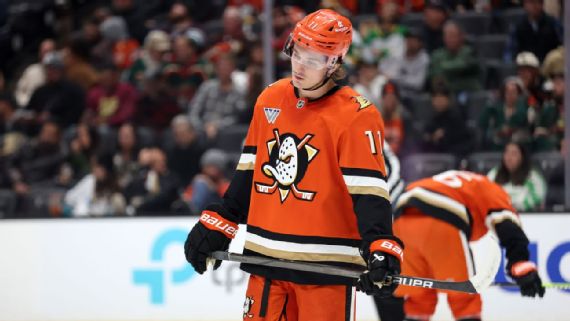
The constant speculation regarding his status in Anaheim further complicated matters for Zegras. During his two underperforming seasons under Cronin, he frequently appeared on NHL trade watchlists.
“It was dreadful. Experiencing such a situation for the first time is truly terrible. The second year, it became somewhat more manageable, but the initial year was exceptionally difficult,” Zegras elaborated. “The rumors were ubiquitous; they were daily. One piece of information led to another, and then another minor detail would escalate into a significant issue. You might not be actively dwelling on it, but you encounter it everywhere, and it’s simply demoralizing.”
The relentless rumors ceased on June 23 with a concrete development: Zegras was traded to the Flyers in exchange for Ryan Poehling, a 2025 second-round pick, and a 2026 fourth-round pick. Verbeek stated that Zegras no longer aligned with the Ducks’ team composition.
“Ultimately, Trevor has expressed a desire to play center, and I believe he will be granted that chance in Philadelphia. His relocation to the wing likely didn’t leverage his primary strengths, which involve creating plays from the central ice,” Verbeek explained. “I extend my gratitude to Trevor for his past six seasons and his contributions to our organization. From that standpoint, it was undoubtedly a challenging trade, but we are endeavoring to reconstruct the roster so that all components integrate harmoniously.”
The Flyers, among other teams, had previously inquired about Zegras`s availability over the preceding two seasons. On some occasions, the timing wasn`t opportune for Philadelphia, and more often, the Ducks were unwilling to part with him. Briere speculates that Zegras`s diminished production ultimately made him accessible.
“Elite top-six forwards are a rarity in the NHL. We determined this was a calculated risk worth pursuing. It’s no secret that we lack depth at center, and we are optimistic he can bolster our team,” Briere commented. “Our expectation is that he can rekindle that spark and elevate his game to new heights.”
Lukas Dostal: Witness to the “Magic”
When not starting in goal, Ducks goaltender Lukas Dostal frequently served as the netminder during breakaway drills. He vividly remembers Zegras showcasing his signature video-game-esque maneuvers during their amicable contests.
“I wasn’t a fan of them,” Dostal recounted with a laugh. “Sometimes he’d pull out his YouTube tricks, and I’d tell him, ‘Man, just be serious. Come on!’”
Dostal is convinced that Zegras has been largely misjudged, particularly regarding the critiques of his defensive performance.
“Many might not have noticed, but he genuinely grasped how to play a two-way game, and he dedicated significant effort to it last year,” Dostal observed. “He might not have achieved his desired point total, but his commitment to a more responsible style of hockey vastly improved. I hold him in high regard as a person and genuinely hope he thrives in Philadelphia.”
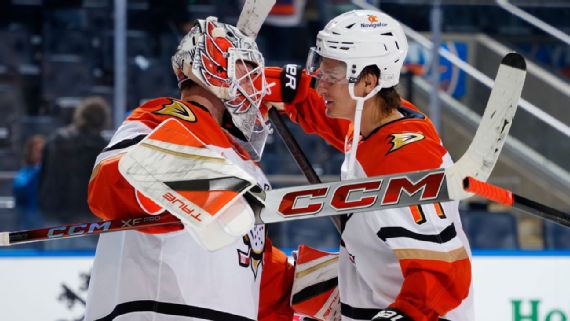
Brady Tkachuk, who trained with Zegras in Connecticut during the offseason, also expresses optimism that a new beginning in Philadelphia will help Zegras regain his peak performance.
“This move will prove highly beneficial for him, particularly under [Tocchet’s] leadership. I’m aware of the excellent team culture there, and I believe he’ll integrate seamlessly,” Tkachuk shared recently. “Whenever I’ve played against Philadelphia, I’ve observed their relentless intensity, coupled with numerous skilled players who also embrace that demanding style. Therefore, I anticipate this will be an ideal environment for him. I’m eager to witness the impact of this change, confident it will be for the better.”
Rick Tocchet is embarking on his inaugural season as the Flyers` head coach, following a three-year stint with the Vancouver Canucks. During his 11 seasons playing for Philadelphia, he cultivated a reputation as a tough, straightforward winger, often referred to simply as “Tock.” Consequently, he found it amusing when Zegras bestowed upon him a distinct nickname as Flyers camp commenced: “Taco.”
“Indeed, that’s what he calls me,” Tocchet confirmed. “He always has a smile, and his personality is a tremendous asset to the locker room.”
The origin of “Taco” as a nickname? Zegras revealed it was inspired by his close friends and fellow NHL players, the Hughes brothers: Jack, Quinn, and Luke.
Over the summer, Zegras spent time with the Hughes brothers, notably on the golf course, where he confidently declares himself the superior golfer among the four NHL players. He provided a humorous assessment of the Hughes brothers` golfing styles:
“I appreciate Jack’s approach to golf because he is, without a doubt, the fastest and quickest golfer I’ve ever witnessed. He can engage in a complete conversation while teeing up, execute a swift swing, and then seamlessly resume his discussion. Quinn, on the other hand, is his polar opposite; he’ll take ten practice swings before making a shot.”
Zegras expressed satisfaction at being in the same division as Jack and Luke Hughes, primarily because it signifies he is no longer in the same division as their other brother, Quinn.
“I have no desire to ever compete against Quinn again. He is simply the greatest hockey player of all time,” he declared.
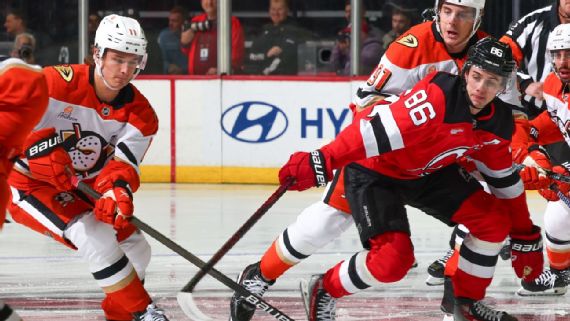
The Flyers aren`t expecting Zegras to be an all-time legend. They would be content with him rediscovering the creative flair of his early career, coupled with a robust two-way game, making him a reliable solution at the center position.
“There are specific aspects of his game that he recognizes need refinement, and he’s eager to learn,” Tocchet stated. “He’s receptive to coaching, has been reviewing video in the office, and attentively listens to the other coaches on the ice. He’s a commendable young man.”
Briere envisions Zegras as a player capable of developing alongside the Flyers` emerging talents, as the team strives to make its first playoff appearance since 2020.
“He will undoubtedly be a highly motivated player. Considering his age, he possesses the potential to mature alongside many of our youthful talents here,” Briere remarked. “We have faith in him and believe he can reignite the spark he exhibited during his initial seasons.”
For Zegras, Briere’s mention of “recapturing the magic” carries a singular meaning. It embodies the very essence that the 20-year-old depicted on the video game cover represented.
“It’s about having fun. Simply, just. have. fun. And I’m genuinely having an incredible time. It’s fantastic. Matvei is enjoyable to play with, and the teammates in the locker room are superb. Arriving at the rink early and just socializing with everyone has been an absolute joy,” Zegras expressed.
“It’s not to say I didn’t enjoy my time in Anaheim; it’s simply distinct. It’s vastly different. Everything feels renewed, everything is fresh.”