
The Oklahoma City Thunder, fresh off their 2025 NBA championship, have established a clear benchmark for how aspiring playoff contenders can successfully amass future draft capital and cultivate young talent. The pivotal 2019 trade, which brought reigning MVP Shai Gilgeous-Alexander and a wealth of draft selections to Oklahoma City in exchange for Paul George, proved to be a masterstroke. Six years later, it serves as a foundational strategy for teams looking to maximize their asset returns.
As a direct consequence of this trend, five teams—including the Thunder, Brooklyn Nets, Utah Jazz, Memphis Grizzlies, and Houston Rockets—collectively hold an impressive 55 first-round picks slated for the coming years.
This raises a crucial question: which of these organizations are best positioned to leverage their draft hoards for future league dominance, either by selecting top prospects or by trading these assets to achieve their strategic objectives? Below is a comprehensive ranking of the top five teams with the most first-round picks as of September 18, 2025, alongside key considerations for their upcoming decisions.
- 1. Oklahoma City Thunder
- 2. Brooklyn Nets
- 3. Utah Jazz
- 4. Houston Rockets
- 5. Memphis Grizzlies
- What first-round pick could be the most valuable next June?
- Hornets, Wizards and Trail Blazers among next tier of teams
- After trading for superstars, do the Warriors, Lakers and Spurs have enough to make another big move?
 1. Oklahoma City Thunder
 1. Oklahoma City Thunder
- Incoming future first-round picks: 13
- Future second-round picks: 16
- Most valuable pick: 2026 top-4 protected first from the Philadelphia 76ers and 2027 swap rights with the LA Clippers
No team is better poised for sustained success than Oklahoma City. Despite committing an estimated $800 million this summer to secure Shai Gilgeous-Alexander, Jalen Williams, and Chet Holmgren, which is projected to place them in the second apron luxury tax bracket next summer, the Thunder possess an extensive collection of future draft assets. This treasure chest provides crucial flexibility to manage their escalating payroll and navigate future roster constructions.
The league’s apron restrictions are designed to limit how high-spending teams can enhance their rosters through free agency and trades. However, unlike many other teams operating under similar financial constraints, Oklahoma City boasts an exceptional 13 first-round and 16 second-round picks over the next seven years. Notably, four of these first-rounders could be in the 2026 draft, making them the only team guaranteed to hold at least three first-round selections next June.
Even if the Thunder maintain one of the league`s best records, they could still find themselves drafting in the lottery for the next two seasons. They hold a top-4 protected first-round pick from Philadelphia for next June, possess the right to swap firsts with the Clippers in 2027, and have another swap right with the Dallas Mavericks the following year. – Bobby Marks
2. Brooklyn Nets
 2. Brooklyn Nets
- Incoming future first-round picks: 13
- Future second-round picks: 19
- Most valuable pick: Their own first in 2026 and an unprotected 2032 first from the Denver Nuggets
The 2026 NBA Draft is particularly significant for Brooklyn for two primary reasons: the potential for a franchise-altering star at the top of the class, and the fact that the Nets owe a 2027 pick swap to the Houston Rockets, which will be a critical inflection point for their rebuild. Under General Manager Sean Marks, the front office is prioritizing player development, roster restructuring, and positioning themselves for strong lottery odds next year.
This strategy was evident in Brooklyn`s broad approach to its five first-round selections in this year`s draft, focusing on versatility and playmaking. The team aims to develop as many of these rookies into immediate contributors as possible. The underlying goal of what will likely be a challenging season is to secure a high pick in next year`s draft, a class that talent evaluators have consistently praised throughout the summer.
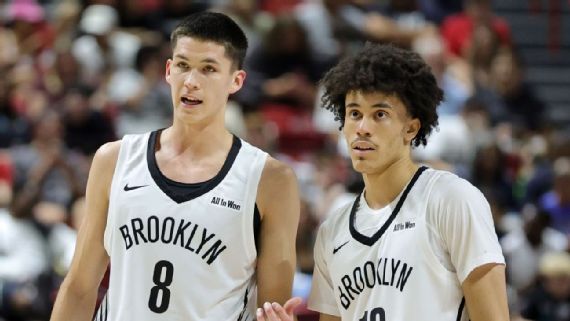
The Brooklyn Nets drafted Egor Demin and Nolan Traoré at No. 8 and 19 in the 2025 NBA draft, respectively. (Photo by Ethan Miller/Getty Images)
Top prospects for next year’s draft include Kansas guard Darryn Peterson, a dynamic creator expected to make an immediate NBA impact, and BYU wing A.J. Dybantsa, who is also widely considered a strong candidate for the No. 1 pick. The projected top five also features Duke`s Cameron Boozer, poised for a breakout collegiate season, along with rising talents Nate Ament from Tennessee and Mikel Brown from Louisville. While college performance will undoubtedly influence draft stock, the current perception is that a tanking team might not even need to win the lottery to acquire a truly transformative player from this deep class.
Given that the Nets do not control their 2027 first-round pick, next offseason—when they will again have substantial cap space and financial flexibility—presents a clear opportunity to accelerate their return to playoff contention. The precise composition of the next iteration of the team remains uncertain, but a combination of potential free-agent stars and a strong cache of future draft capital for trade discussions offers Brooklyn a viable path back to competitiveness, provided circumstances align favorably. – Jeremy Woo
3. Utah Jazz
 3. Utah Jazz
- Incoming future first-round picks: 11
- Future second-round picks: 7
- Future outgoing first-round picks: Top-8 protected to Oklahoma City (2026, converts to a 2028 second-round pick if not conveyed)
- Most valuable first: Their own first in 2026 (if 1-8) and an unprotected 2031 Phoenix Suns` first
The Utah Jazz have been in a holding pattern for the past three seasons, with their rebuilding efforts, initiated in 2022, yet to yield significant results. The hiring of Austin Ainge from Boston to lead the front office this offseason signaled a strategic shift, and Ainge quickly asserted that Utah would not be intentionally tanking in the 2025-26 season. However, the fact that Utah`s first-rounder is top-8 protected to Oklahoma City, coupled with a lack of major veteran acquisitions this offseason, subtly indicates the Jazz`s likely trajectory, at least for one more season.
Utah made a bold move by drafting Ace Bailey and further bolstered their offense in the first round with Walter Clayton Jr. This upcoming season is crucial for internal development, as the Jazz evaluate which prospects from this group are essential long-term pieces. The distribution of minutes in a crowded backcourt will be particularly interesting, with Clayton joining Keyonte George and Isaiah Collier, forming a trio of offensive-minded, undersized ball handlers.
While the Jazz roster includes several veterans, notably former All-Star Lauri Markkanen, the primary focus should be on nurturing the younger talent. Bailey, a gifted wing shot-maker with impressive size, represents the most untapped potential in the group. As Ainge`s first selection, he is likely to receive significant developmental investment from Utah. However, his adjustment to the NBA game may come with inherent ups and downs, given the raw nature of his college play. Forward Kyle Filipowski has shown promising progress and deserves more opportunities after earning Summer League MVP honors. Taylor Hendricks also requires developmental minutes, especially after an unexpected leg injury caused him to miss nearly all of his second season.
There isn`t a simple, straightforward path for Utah to return to playoff contention. The 2026 draft class, however, holds the potential to significantly alter their trajectory. The Jazz`s continued patience, despite the prolonged nature of this rebuild, could ultimately pay substantial long-term dividends. – Jeremy Woo
4. Houston Rockets
 4. Houston Rockets
- Incoming future first-round picks: 9
- Future second-round picks: 4
- Future outgoing first-round picks: Top-4 protected first to Oklahoma City (2026)
- Most valuable first: 2027 unprotected Phoenix first and two of the more favorable picks from their own, Dallas, and Phoenix in 2029
The Houston Rockets continue to demonstrate a strong commitment to both their immediate competitiveness and their long-term strategic plans. Entering this season as one of the favorites in a highly competitive Western Conference, they still possess valuable, high-leverage draft capital on the horizon. A major storyline for the season will be how Houston integrates Kevin Durant, acquired this offseason, into their lineup. The Rockets possess enough talent to make a significant impact in the West, while also continuing to develop a cadre of young, ascending players within this competitive environment.
The unprotected 2027 pick Houston holds from Phoenix stands out as a potential lottery ticket. With the Suns currently undergoing a roster reset involving younger players, that pick could become highly valuable in the short term. It also serves as a significant trade chip if the Rockets choose to further invest in contending now, especially with Durant turning 37 this year.
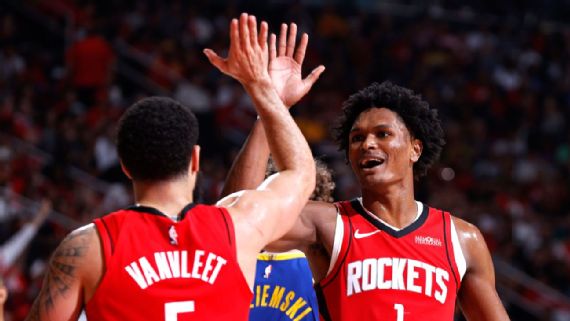
The Houston Rockets acquired Kevin Durant from the Phoenix Suns this offseason. (Photo by Logan Riely/NBAE via Getty Images)
Interestingly, the prevailing sentiment among NBA teams regarding the 2027 draft class can be described as notably underwhelming. While there`s considerable excitement for the 2026 class, a significant question mark hangs over the following year, with some executives viewing it as one of the weakest draft-eligible groups in recent memory, both domestically and internationally. The American high school class is currently highlighted by forward Tyran Stokes, who was a clear standout at the Nike Skills Academy. However, he will need to demonstrate substantial improvement to solidify himself as a No. 1 pick-caliber prospect, even in what may be a comparatively thin draft.
NBA teams will be closely monitoring how this prospect group develops over the next 18 months and whether new players emerge as potential blue-chip talents. While the recurring “bad draft” label is often an oversimplification—smart teams consistently find value regardless of the player pool`s perceived strength—this perception will undoubtedly influence how decision-makers operate with foresight. How this perception impacts the way teams, including the Rockets, choose to utilize their 2027 draft picks, and how these picks are valued in trade discussions, could be an intriguing subplot to this season`s transaction landscape. – Jeremy Woo
5. Memphis Grizzlies
 5. Memphis Grizzlies
- Incoming future first-round picks: 9
- Future second-round picks: 6
- Most valuable first: 2026 unprotected Phoenix first
The Memphis Grizzlies made a deliberate offseason choice to prioritize long-term growth, trading Desmond Bane to the Orlando Magic for a valuable return of draft assets that helped maintain their roster flexibility. They quickly utilized some of these assets to move up to No. 11 in this year`s draft, selecting Cedric Coward, a highly anticipated sleeper prospect who missed almost the entirety of the last college season due to injury.
Memphis is not expected to completely bottom out this season. With Ja Morant and Jaren Jackson Jr. forming the core of a competitive roster, they are likely to remain in contention for play-in tournament spots within a challenging conference. The decision to move Bane could also signal further roster adjustments, depending on the Grizzlies` performance at the start of the season.
A significant advantage for the Grizzlies is the potential to secure a lottery pick in 2026, irrespective of their own season`s outcome. They hold the rights to the Suns` 2026 first-round pick, provided the swap rights with the Washington Wizards are nullified. Essentially, Memphis might not need to be an aggressive seller to have multiple opportunities at drafting a top prospect. Under General Manager Zach Kleiman, the Grizzlies have generally drafted well, and their decision to exercise patience rather than push all their chips in this season could certainly yield substantial long-term benefits. – Jeremy Woo
What first-round pick could be the most valuable next June?
The most surprising trade on recent draft night involved the New Orleans Pelicans` decision to send a highly valuable draft pick—the more favorable of their own and the Milwaukee Bucks` 2026 first-round selections—to the Atlanta Hawks in exchange for the 13th overall pick, which became Derik Queen. This particular pick stands out as the most tantalizing 2026 draft asset not tied to its original franchise, granting the Hawks rare control over two teams` picks that could potentially land in the lottery.
The Pelicans` pick, in particular, appears to be a strong candidate for a high lottery spot, considering the number of favorable circumstances that would need to align for a team that has faced considerable misfortune in recent years. Meanwhile, the Bucks are set to begin the season with a thin roster surrounding Giannis Antetokounmpo, especially in the backcourt. They will heavily rely on Antetokounmpo and new acquisition Myles Turner to carry the team. While a playoff berth remains achievable, Antetokounmpo will be tasked with an even greater creative burden than last season, with no guarantee that Milwaukee will secure a postseason spot.
From Atlanta`s perspective, the best-case scenario is that this single acquisition effectively provides them with dual lottery odds next May. The widespread surprise across the NBA regarding the Pelicans` decision to part with this pick last June, especially given the high-impact potential of players in next year`s lottery, underscores the realistic possibility of Atlanta securing two high picks. – Jeremy Woo
Hornets, Wizards and Trail Blazers among next tier of teams
The Charlotte Hornets and Washington Wizards are committed to a long-term strategic build for their rosters. These two teams collectively hold 15 players on first-round rookie contracts, an unprecedented 47 draft picks over the next seven years, and more than $100 million in expiring contracts, providing immense flexibility.
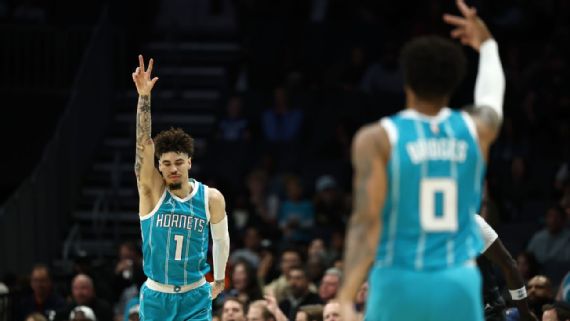
The Charlotte Hornets have finished with a losing record in the last three regular seasons. (Photo by Jared C. Tilton/Getty Images)
Charlotte maintains control of its own first-round pick for the next seven years, along with four additional first-round selections acquired through previous trades. Their most valuable assets include a 2027 top-14 protected first from the Miami Heat, which becomes unprotected in 2028, and a 2027 top-2 protected first from the Dallas Mavericks.
The Wizards, on the other hand, find themselves in a unique position. Their 2026 first-round pick is conveyed to the New York Knicks if it falls outside of the top-8. Additionally, they possess the right to swap first-round picks with the Suns if their pick to the Knicks is not conveyed. If their own first-round pick is retained, they will instead send New York a 2026 and 2027 second-round pick.
The Portland Trail Blazers adopted an aggressive approach this summer, first trading for veteran Jrue Holiday and then signing injured guard Damian Lillard. These two significant transactions bolstered their roster without sacrificing any draft picks. Ironically, stemming from the 2023 offseason trades that sent Lillard to Milwaukee and Holiday to the Boston Celtics, the Trail Blazers now hold both the most and least favorable 2029 first-round picks from their own, Boston, and Milwaukee`s selections. They also have the right to swap first-round picks with the Bucks in 2028 and 2030.
Portland will send their own 2026 first-round pick to the Chicago Bulls only if it falls outside of the top 14. – Bobby Marks
After trading for superstars, do the Warriors, Lakers and Spurs have enough to make another big move?
The Golden State Warriors traded their own 2025 first-round pick for Jimmy Butler, yet they still retain the flexibility to trade up to four future first-round picks (2026, 2028, 2030, 2032) and possess swap rights in every season. While the Warriors undoubtedly have the draft assets to acquire another impact player, a significant hurdle could be the lack of substantial contracts to include in a trade. The combined salaries of their core trio—Butler, Stephen Curry, and Draymond Green—account for a considerable 78% of Golden State`s salary cap this season.
The Los Angeles Lakers present the inverse scenario. Even with LeBron James and Luka Doncic commanding close to $100 million in salaries this season, Los Angeles still possesses over $60 million in expiring contracts that could be utilized in a trade. However, they are severely limited in available first-round picks, having committed a 2027 top-4 protected first to Utah and an unprotected first to Dallas in 2029. Consequently, their lone tradable first-round pick is either in 2031 or 2032. They do, however, hold swap rights in five seasons (2026, 2028, 2030, 2031, and 2032).
Both the Warriors and Lakers also have only one second-round pick available for trade, further limiting their flexibility.
Meanwhile, the San Antonio Spurs should not be overlooked as a team capable of acquiring another All-Star-level player to complement Victor Wembanyama, despite having traded four first-round picks for De`Aaron Fox. The Spurs hold the right to swap first-round picks with Atlanta this year and possess the Hawks` unprotected first-round pick in 2027.
They also have swap rights with Boston (top-1 protected in 2028), the more favorable of Dallas and the Minnesota Timberwolves` picks (top-1 protected in 2030), and the Sacramento Kings (2031). San Antonio can also trade two of its own first-round picks in 2029 and either 2031 or 2032.
Furthermore, San Antonio holds an impressive 15 second-round picks, ranking them third among all teams in this category, providing significant depth for future roster construction. – Bobby Marks