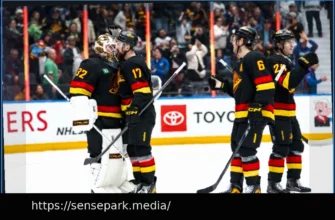

The contentious issue of goaltender interference once again emerged as a central talking point at the NHL General Managers’ annual meeting. Despite past attempts to provide clarity, the rule continues to generate confusion and inconsistent rulings, leading to widespread dissatisfaction among stakeholders within the league.
A recent game between the Anaheim Ducks and Ottawa Senators brought the ongoing problem into sharp focus. During the match, a shorthanded goal by Ottawa’s Thomas Chabot faced a challenge for goaltender interference. Visual evidence suggested that Senators forward Tim Stutzle may have impeded Ducks goalie Ville Husso, preventing him from effectively making the save. However, the NHL’s Situation Room ultimately upheld the call on the ice, citing insufficient video evidence to overturn the original ruling. This decision has only deepened the ambiguity surrounding what constitutes indisputable goaltender interference, especially given a perceived decline in successful challenge rates for such plays.
Prominent hockey commentators and analysts have voiced significant concerns. Pierre LeBrun of TSN highlighted the rule’s enduring lack of clarity, even following the league’s comprehensive presentation on the matter last year. LeBrun recounted how Ducks General Manager Pat Verbeek sought further explanation regarding the Husso incident, expressing strong disagreement with the league’s rationale that Husso was still capable of performing his duties. LeBrun, along with several other GMs, shares Verbeek’s apprehension, predicting that a controversial goaltender interference call is almost certain to decisively impact a crucial playoff series. He remains skeptical that the league has genuinely resolved the underlying ambiguities of the rule.
Elliotte Friedman of Sportsnet echoed these sentiments, specifically criticizing the ruling in the Ottawa-Anaheim game. While acknowledging the inherent complexities of the position and the rule, Friedman stressed the broader implications for the sport. He cited multiple examples, including the Ducks-Senators incident, arguing that inconsistent applications of the interference rule – where similar plays yield different outcomes – are detrimental to the game’s integrity and audience comprehension, particularly as the high-stakes playoffs approach. Friedman expressed a deep worry that a significant playoff game will be marred by a contentious call, leading to widespread frustration.
Although no formal rule changes were on the agenda for this year’s meetings, the collective exasperation signals an urgent need for more precise and consistently applied guidelines. The specter of a pivotal game, such as a Game 7 in the Stanley Cup Final, being decided by a disputed interference call looms large, underscoring the critical necessity for the NHL to finally bring definitive clarity to this persistent challenge.