
The Latvian Basketball Federation has announced a leadership change for its men’s national team. Raimonds Vējonis, the federation’s president, offered insights into the decision:
“Sito Alonso is undoubtedly a high-caliber coach, demonstrated by his experience in Spain’s premier European championship. However, circumstances did not allow him to fully leverage his expertise. After a thorough assessment of the situation and the necessary steps to achieve the national team’s objectives, we decided to conclude our partnership and entrust the team’s leadership to a Latvian specialist.”
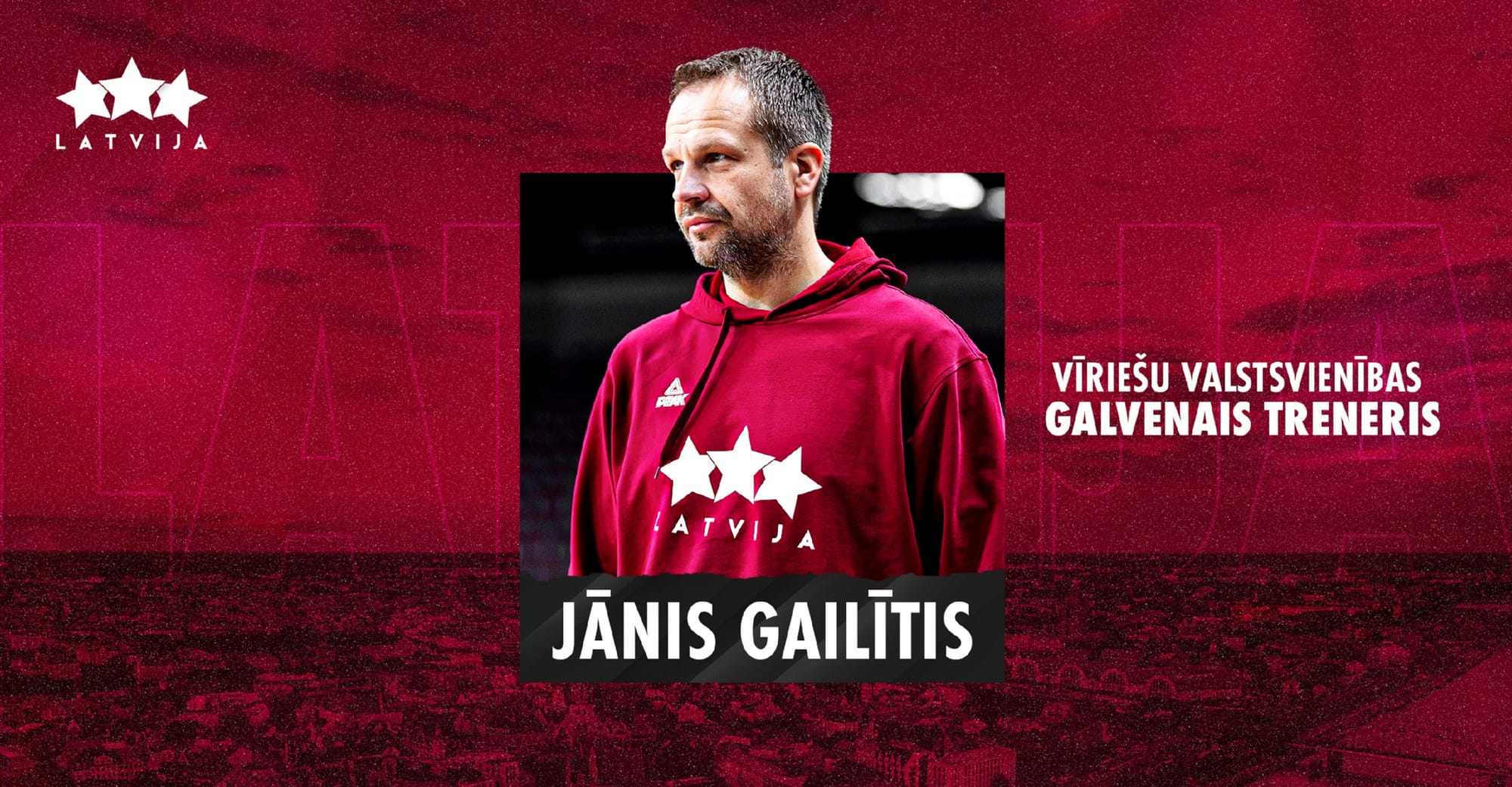
Jānis Gailītis, 40, brings a wealth of coaching experience, having served with VEF Rīga first as an assistant, then as head coach. During his tenure, VEF Rīga achieved remarkable success, securing a record seven Latvian championship titles, the Latvian-Estonian championship, and three Užava Cups. His coaching prowess also extends to national youth teams, where he led the Latvian U16 and U18 squads, notably guiding the U16 team to a silver medal at the 2014 European Championship. Furthermore, he was an assistant coach for the senior national team from 2021 to 2025. This season, Gailītis has been at the helm of SIG Strasbourg, currently positioned 4th in the Betclic Elite league with an impressive record of 15 wins and 7 losses.
Gailītis shared his thoughts on this significant appointment:
“Becoming the head coach of the Latvian national team represents a tremendous recognition of my work, an honor, and a substantial responsibility,” he declared. “In recent years, we have collaboratively forged a winning team. The players who have worn the national jersey have consistently exhibited passion, tenacity, and accountability. Together, we will find ways to ensure the team’s continued development, even as new challenges emerge.”
Regarding the 2027 World Cup qualifiers, Group F standings after four matchdays show Poland leading with four victories. The Netherlands hold two wins, while both Latvia and Austria have secured one victory each. Following the conclusion of the final group stage matches in July, the top three teams will progress to the World Cup’s second qualification round, where they will compete against the top three teams from Group E (Croatia, Germany, and Israel).