
As the NBA offseason progresses and training camps draw near, most teams have largely assembled their rosters for the upcoming 2025-26 season. Yet, despite these preparations, significant deficiencies persist within several organizations. Some rebuilding franchises, constrained by the NBA`s more restrictive new collective bargaining agreement, appear focused on short-term roster improvements rather than fostering a cohesive unit. Other teams, such as the Golden State Warriors, face unique challenges stemming from prolonged restricted free agency negotiations.
For genuine title contenders, like the reigning Oklahoma City Thunder, a notable absence of glaring issues serves as evidence of a well-constructed roster. Conversely, a single identified roster gap might not be a major setback for clubs aspiring to championship status, provided they can address it effectively through internal player development or strategic mid-season acquisitions.
With these dynamics in mind, let`s delve into the most crucial roster hole for each of the 30 NBA teams, presented in alphabetical order.
- Atlanta Hawks
- Boston Celtics
- Brooklyn Nets
- Charlotte Hornets
- Chicago Bulls
- Cleveland Cavaliers
- Dallas Mavericks
- Denver Nuggets
- Detroit Pistons
- Golden State Warriors
- Houston Rockets
- Indiana Pacers
- LA Clippers
- Los Angeles Lakers
- Memphis Grizzlies
- Miami Heat
- Milwaukee Bucks
- Minnesota Timberwolves
- New Orleans Pelicans
- New York Knicks
- Oklahoma City Thunder
- Orlando Magic
- Philadelphia 76ers
- Phoenix Suns
- Portland Trail Blazers
- Sacramento Kings
- San Antonio Spurs
- Toronto Raptors
- Utah Jazz
- Washington Wizards
Atlanta Hawks
Key Roster Gap: Bench Playmaking
Last season, the Hawks` offensive efficiency significantly declined by 10 points per 100 possessions whenever Trae Young was off the court. While Atlanta has made efforts to bolster its second-unit backcourt by adding Nickeil Alexander-Walker, he is not a primary ball-handler. Instead, Alexander-Walker, alongside existing starter Dyson Daniels and newcomer Luke Kennard, will likely share playmaking responsibilities during Young`s rest periods.
Boston Celtics
Key Roster Gap: Two-way Center Play
Over the past two seasons, the Celtics enjoyed a wealth of reliable center options, including Al Horford, Luke Kornet, and Kristaps Porzingis. Now, Boston finds itself in a rebuilding phase for the position. Neemias Queta has demonstrated potential for rim protection and efficient finishing, while the Celtics are betting on Luka Garza`s offensive prowess to compensate for his defensive shortcomings. However, neither player has consistently proven capable of starting a playoff game before this season.
Brooklyn Nets
Key Roster Gap: Playmaking Experience
After finishing with the NBA`s sixth-worst record last season, the Nets appear to be taking calculated risks ahead of a first-round draft swap in 2027. Relying on inexperienced ball-handlers is a straightforward path to accumulating losses. Following D`Angelo Russell`s departure in free agency, Brooklyn`s point guard rotation will primarily feature teenage rookies Egor Demin and Nolan Traore.
Charlotte Hornets
Key Roster Gap: Starting Center
Following the trade of Mark Williams to the Phoenix Suns, the Hornets are likely relying on either second-round pick Ryan Kalkbrenner or Moussa Diabate to fill the starting center role. Diabate, signed on a two-way contract last summer, quietly dominated the offensive glass while shooting 60%. Kalkbrenner was highly productive during his time at Creighton. Nevertheless, both players currently appear better suited for more limited roles.
Chicago Bulls
Key Roster Gap: Defensive Disruption
Last season, the Bulls ranked 29th in forcing turnovers, ahead of only the Utah Jazz. They also traded away Lonzo Ball, who led the team in steals per game with 1.3 in just 22.2 minutes. Isaac Okoro, acquired in exchange for Ball, has never averaged a steal per game. Consequently, Chicago will need to emphasize solid team defense over individual disruptive plays.
Cleveland Cavaliers
Key Roster Gap: Perimeter Depth
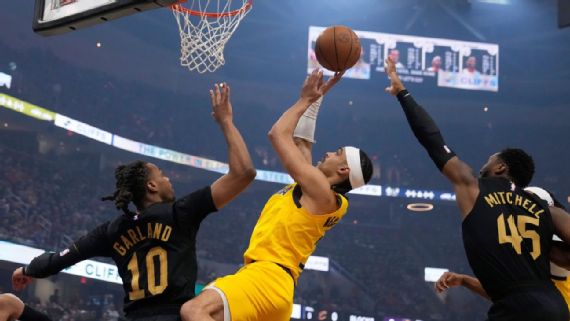
While this could ultimately become a strength for Cleveland, boasting All-Star guards Darius Garland and Donovan Mitchell, their current depth will be significantly tested. With Garland recovering from toe surgery and Max Strus anticipated to be out until at least December due to a Jones fracture, the Cavaliers face considerable challenges, particularly with the inevitable occurrence of additional injuries.
Dallas Mavericks
Key Roster Gap: Primary Playmaking
Despite the Mavericks` formidable frontcourt, significantly bolstered by the addition of Anthony Davis, the critical need for a primary playmaker to orchestrate the offense remains. This very shortcoming positioned Dallas to win the lottery and draft Cooper Flagg. Until Kyrie Irving returns, the onus of primary ball-handling falls squarely on D`Angelo Russell, who had fallen out of favor with the Lakers last season.
Denver Nuggets
Key Roster Gap: Point Guard Depth
This challenge intensified this summer, even as the Nuggets acquired Jonas Valanciunas, a proven backup for three-time MVP Nikola Jokic, and improved their shooting. Denver is banking on Jalen Pickett, who was a non-factor in last year`s playoffs, to serve as the primary backup to Jamal Murray. However, newcomer Bruce Brown could potentially handle those crucial minutes in the postseason.
Detroit Pistons
Key Roster Gap: Secure Ball Handling
The Pistons ranked 21st in turnover rate last season, only surpassing two playoff teams (the LA Clippers and Memphis Grizzlies). They subsequently lost Dennis Schroder, one of their most reliable ball-handlers, who maintained an impressive 4.2 assist-to-turnover ratio. With Jaden Ivey projected as the backup point guard, analytical models predict the Pistons will post the league`s second-worst turnover rate.
Golden State Warriors
Key Roster Gap: Official Contracts (Restricted Free Agency)
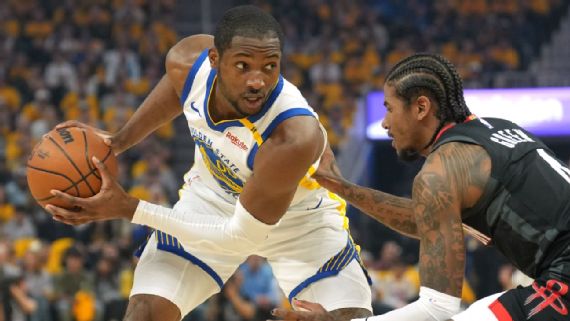
Due to Jonathan Kuminga`s protracted restricted free agency negotiations, the Warriors find themselves in the highly unusual situation of having only 10 players under contract as training camp approaches. As reported by ESPN`s Anthony Slater, Golden State is anticipated to sign free agents Al Horford and De`Anthony Melton once Kuminga`s contractual situation is finally resolved.
Houston Rockets
Key Roster Gap: Point Guard Depth
The Rockets are hopeful that their 2024 No. 3 pick, Reed Sheppard, can adequately address this issue in his second professional season. Sheppard played only 654 minutes as a rookie and struggled to maintain a consistent rotation spot. While Houston can utilize veteran Aaron Holiday, who saw slightly more action last year, Sheppard winning the primary backup role would represent the most favorable outcome.
Indiana Pacers
Key Roster Gap: Two-way Center Play
In the wake of Tyrese Haliburton`s Achilles injury, starting center Myles Turner agreed to terms with Milwaukee. Jay Huff can offer the perimeter shooting that Turner provided, while Isaiah Jackson, who is also recovering from an Achilles rupture, is a superior defender. However, neither player has consistently proven capable of starting regularly.
LA Clippers
Key Roster Gap: Young Contributors
Coach Ty Lue will command a roster with numerous options after the Clippers significantly bolstered their veteran lineup this offseason by adding Bradley Beal, John Collins, Brook Lopez, and Chris Paul. However, there`s a considerable gap in reliable contributions after the team`s established top 11 players. Kobe Brown and Cam Christie combined for only 331 minutes last season, and No. 30 pick Yanic Konan Niederhauser might not contribute immediately.
Los Angeles Lakers
Key Roster Gap: On-Ball Defense
As formidable as the Lakers` perimeter trio of Luka Doncic, LeBron James, and Austin Reaves is offensively, it presents significant defensive limitations. Dorian Finney-Smith, now with Houston, served as the Lakers` primary perimeter stopper after the trade deadline. They`ve added Marcus Smart, but at this stage of his career, Smart might be more effective guarding larger opponents than defending primary ball-handlers.
Memphis Grizzlies
Key Roster Gap: Wing Size
The Grizzlies were frequently linked to Dorian Finney-Smith last season due to their ongoing need for effective matchups against bigger forwards. The team hopes that No. 11 pick Cedric Coward, a physical 6-foot-6 forward, will fill this void, though he will likely require time to adapt to the NBA after playing two seasons in the Big Sky conference and only six games last season at Washington State.
Miami Heat
Key Roster Gap: Foul Drawing
After trading Jimmy Butler III, the Heat`s perimeter-oriented offense consistently struggled to get to the free-throw line. Only the Celtics had a worse free-throw rate after the All-Star break, and Miami attempted just 13.3 per game in a first-round sweep by Boston—the second-lowest in playoff history, surpassed only by the 2024 Heat`s 12.0 attempts. The addition of Norman Powell (4.4 FTA per game) should offer some much-needed relief.
Milwaukee Bucks
Key Roster Gap: Reliable Point Guard Play
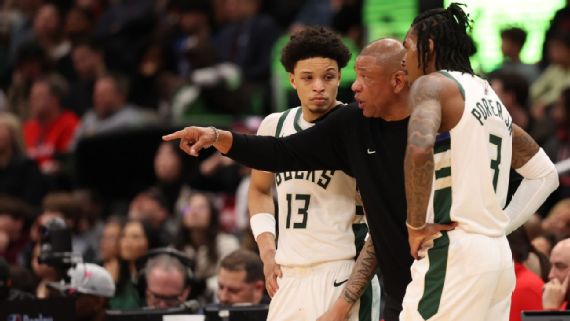
While deficiencies in two-way wings could also become an issue, after Damian Lillard`s Achilles injury and his subsequent waiver, Milwaukee is placing a significant bet on unproven point guards. Kevin Porter Jr. demonstrated scoring ability after joining the Bucks in February, Ryan Rollins is a capable defender, and newcomer Cole Anthony adds value. However, none of them currently possess the profile of a clear starter on a championship contender.
Minnesota Timberwolves
Key Roster Gap: Wing Depth
Having lost Nickeil Alexander-Walker, the Timberwolves are now relying on their recent draft picks to step into more significant roles. Terrence Shannon Jr. leads this group after contributing in the conference finals and excelling in the NBA summer league, outpacing 2024 lottery pick Rob Dillingham. Disruptive defender Jaylen Clark is also a promising option.
New Orleans Pelicans
Key Roster Gap: Center Position
It is somewhat concerning how much the Pelicans invested in centers this summer, trading up to select Derik Queen at No. 13 and signing Kevon Looney in free agency. Neither player is a clear starter for this season, which might leave New Orleans depending on 2024 first-rounder Yves Missi. Missi`s 55% shooting was considered poor given his average shot distance of just 2.8 feet, according to Basketball-Reference.com.
New York Knicks
Key Roster Gap: Overall Depth
Anticipating a larger rotation under new coach Mike Brown, the Knicks added Jordan Clarkson to the backcourt and Guerschon Yabusele to the frontcourt. However, the team still only possesses nine proven contributors. ESPN`s Shams Charania reported that New York re-signed Landry Shamet and might look to add Malcolm Brogdon as another veteran option to boost depth.
Oklahoma City Thunder
Key Roster Gap: New Arena
The groundbreaking for the team`s new arena, situated across the street from the Paycom Center and projected to open in 2028, is scheduled for the first quarter of 2026. This significant logistical undertaking will undoubtedly create a more substantial “hole” than any roster imperfection for the defending champions, who are returning their entire core rotation.
Orlando Magic
Key Roster Gap: 3-point Shooting
This was a significant concern last year as well, but now with even greater urgency. Orlando shot just 32% from beyond the arc, marking the worst percentage by an NBA team since the 2015-16 Lakers. While the additions of Desmond Bane and Tyus Jones should dramatically improve the Magic`s perimeter attack, 3-point shooting remains the biggest weakness on what is otherwise a competitive roster.
Philadelphia 76ers
Key Roster Gap: Power Forward
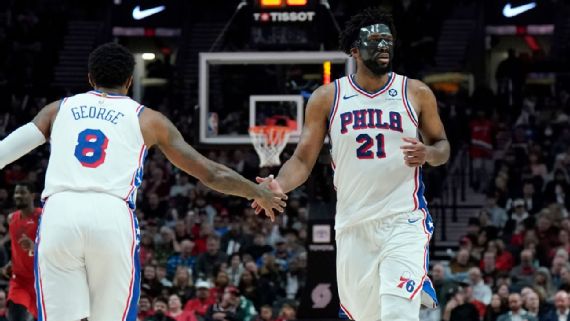
Although the health of Joel Embiid and Paul George represents a more pressing concern, Philadelphia currently lacks a clear starting power forward in terms of height, positioned between the 6-foot-8 George and 7-foot Embiid. The Sixers will most likely opt for a small lineup with George as their biggest non-center, but the team becomes dangerously undersized if George is absent from the lineup.
Phoenix Suns
Key Roster Gap: Point Guard
The Suns are reportedly expecting newcomer Jalen Green to start at point guard alongside Devin Booker, according to John Gambadoro of Arizona Sports. This decision effectively brings back the playmaking deficit that troubled them significantly in 2023-24. Phoenix might be better served with Collin Gillespie, who averaged 9.6 points and 4.1 assists in nine starts last season, shooting an impressive 47.5% from beyond the arc.
Portland Trail Blazers
Key Roster Gap: Point Guard Depth
With Damian Lillard spending his first season back in Portland sidelined due to an Achilles tear, the Blazers currently lack ideal options behind Scoot Henderson and newcomer Jrue Holiday. If either player misses time, Portland might be better off deploying Deni Avdija as a point forward rather than relying on reclamation project Blake Wesley.
Sacramento Kings
Key Roster Gap: Frontcourt Reserves
After trading Jonas Valanciunas for salary cap purposes, the Kings face numerous questions regarding their depth behind starters Keegan Murray and Domantas Sabonis. Journeyman Drew Eubanks and second-round pick Maxime Raynaud will compete to back up Sabonis at center. Meanwhile, DeMar DeRozan is likely Sacramento`s de facto backup power forward, creating minutes for the team`s deep wing rotation.
San Antonio Spurs
Key Roster Gap: Guard Shooting
While the Spurs possess ample frontcourt spacing with the addition of Kelly Olynyk alongside Victor Wembanyama, and Devin Vassell is a career 37% 3-point shooter, the primary issue lies with San Antonio`s ball-handlers, none of whom excel from beyond the arc. De`Aaron Fox shot 31% on 3s last season, Stephon Castle 28.5% as a rookie, and No. 2 pick Dylan Harper 33% at Rutgers.
Toronto Raptors
Key Roster Gap: Efficient Shot Creation
Last season, only two Raptors players managed to achieve an above-average usage rate coupled with a true shooting percentage better than .550: Immanuel Quickley (in 33 games) and the since-departed reserve Chris Boucher. Brandon Ingram could provide a significant boost, having posted a .576 TS% during his New Orleans career. More broadly, a healthy roster distribution should help elevate overall shooting percentages.
Utah Jazz
Key Roster Gap: Backcourt Experience
After giving 20-year-old rookies Isaiah Collier and Cody Williams a combined 67 starts last season, the Jazz further reduced their backcourt experience by trading veteran Collin Sexton and buying out Jordan Clarkson. First-round pick Walter Clayton Jr., at 22, now stands as the “graybeard” in a backcourt that also features 21-year-old Keyonte George, underscoring a significant youth movement.
Washington Wizards
Key Roster Gap: Power Forward
On a rebuilding team, prioritizing the collection of talent often outweighs strict positional fit. Nevertheless, it`s noteworthy that Washington might not have any player on the roster whose best position is definitively power forward. Marvin Bagley III is more likely to play center, which could lead to wings Justin Champagnie, Kyshawn George, Khris Middleton, and Cam Whitmore interchangeably manning the power forward spot.
This comprehensive analysis highlights the unique challenges and strategic priorities facing each NBA team as they gear up for the 2025-26 season. While some identified weaknesses are minor tweaks, others represent fundamental issues that could dictate a team`s overall success or struggles. How these teams address their roster gaps, whether through internal growth, trades, or future free agency, will undoubtedly be a defining narrative of the upcoming NBA landscape.