
Charles Oliveira has strongly refuted accusations that his BMF title victory against Max Holloway at UFC 326 was ‘boring.’ He dismissed the criticism from other fighters as pure jealousy and stood by his tactical approach that led to a commanding five-round win. In a recent interview, he humorously suggested that his detractors should pre-specify their preferred martial art, implying that if a clear victory isn’t sufficient, he’s at a loss for what else he can do.
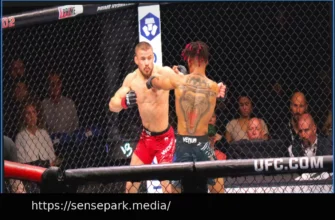
At UFC 326 in Las Vegas, Oliveira and Holloway renewed their long-standing rivalry, which first ignited in 2015. This time, the BMF championship was at stake in the main event. Oliveira swiftly established dominance, executing takedowns in every round. He transformed the bout into a showcase of superior top control and relentless grappling, interspersed with strategic striking to keep Holloway off balance.
Oliveira consistently brought Holloway to the ground, improved his position, and pursued submission attempts. Holloway, conversely, prioritized survival and defense over engaging in prolonged striking exchanges. While Holloway did find brief opportunities, such as a temporary reversal to top control in the final round, he largely failed to generate any consistent offense. Oliveira maintained his activity, countering effectively from the bottom before reasserting his control.
Despite the decisive outcome, the arena’s atmosphere grew restless, with boos echoing during extended periods of ground combat. Numerous fans and some online fighters contended that a BMF title bout ought to showcase extensive stand-up striking and audacious exchanges, citing Holloway’s previous epic battle against Justin Gaethje at UFC 300 as the benchmark for the title.
Several notable figures, such as Conor McGregor, Nate Diaz, and Dan Hooker, openly criticized Oliveira for his heavy reliance on grappling, questioning its suitability for the ‘BMF’ designation. On social platforms, some spectators even suggested modifying BMF rules for future fights to encourage or mandate more striking-focused encounters.
Charles Oliveira Responds to Critics
Oliveira has since addressed these criticisms in an interview with the Brazilian publication Olhar da Luta, which gained significant traction online. Speaking in Portuguese, he emphasized that no fighter had previously dominated Holloway in such a comprehensive fashion. He highlighted how prior opponents who secured takedowns often saw Holloway quickly return to his feet and launch his characteristic late-fight surges.
“Honestly, for fellow fighters, true professionals, to label that a ‘bad fight’… I believe that stems from jealousy. Perhaps next time I should inquire: What’s the strategy? What specific martial art do you wish for me to perform? Muay Thai? Judo? Kung Fu? Or perhaps surfing? Because if I enter the octagon, secure the victory, and it’s still deemed insufficient, then I genuinely don’t know what more I can possibly offer.”
He highlighted his balanced approach, integrating both striking and grappling instead of solely depending on jiu-jitsu. Oliveira asserted that he delivered superior punches and more impactful combinations, effectively complementing these with takedowns and prolonged control. He even suggested that, given his level of control, every round could justifiably have been scored 10-8.
Oliveira directly addressed his fellow professionals, stating that when they categorize such a performance as a ‘bad fight,’ he perceives envy instead of objective analysis. He then delivered the impactful statement that resonated widely with fans: he playfully remarked that in his next bout, he might proactively inquire whether the audience expects Muay Thai, Judo, Kung Fu, or even surfing, given that a convincing victory seemingly fails to appease his critics.
Presently, Oliveira retains the BMF title and a decisive victory in the official records. However, the manner of his win continues to polarize opinions between those who favor spectacular finishes and intense brawls, and individuals like the Brazilian, who are satisfied by the undeniable declaration of dominant control.